Currently Empty: 0,0000 €
 Audio Components
 Battery Management Systems
 Coils & Transformers
 Capacitors
 Connectors
 Crystals
 Diodes & MOSFETs
 Fuses & Protection
 LEDs
LEDs Optoelectronics
 Power Supplies
 Relays
 Resistors
 Switches
  Terminal Blocks
  Tools
Tools Wires & Cables
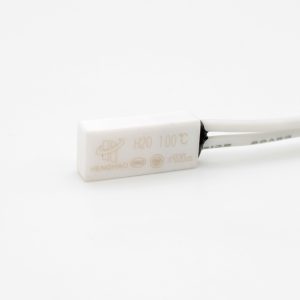
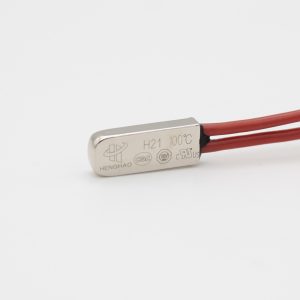
A thermal protector is a safety component used in electronic and electrical circuits to prevent overheating and protect devices from damage caused by excessive temperature. It works by monitoring the temperature of a circuit, motor, transformer, or electronic device and interrupting the flow of current when the temperature exceeds a safe operating limit.
Thermal protectors are commonly found in household appliances, power supplies, electric motors, batteries, and industrial equipment. When abnormal conditions such as overcurrent, poor ventilation, or component failure generate excessive heat, the thermal protector reacts automatically. Depending on its design, it may temporarily disconnect the circuit until the temperature returns to normal, or it may permanently open the circuit to avoid further damage.
There are different types of thermal protectors, including thermal fuses, bimetallic switches, and thermistors. Thermal fuses provide one-time protection by melting when a critical temperature is reached, while bimetallic protectors can reset automatically after cooling down. Thermistors change their electrical resistance with temperature and are often used for temperature sensing and control.
The main purpose of a thermal protector is to improve safety, increase equipment reliability, and extend the lifespan of electronic components. By preventing overheating, thermal protectors help reduce the risk of fire, insulation damage, and costly equipment failures.